













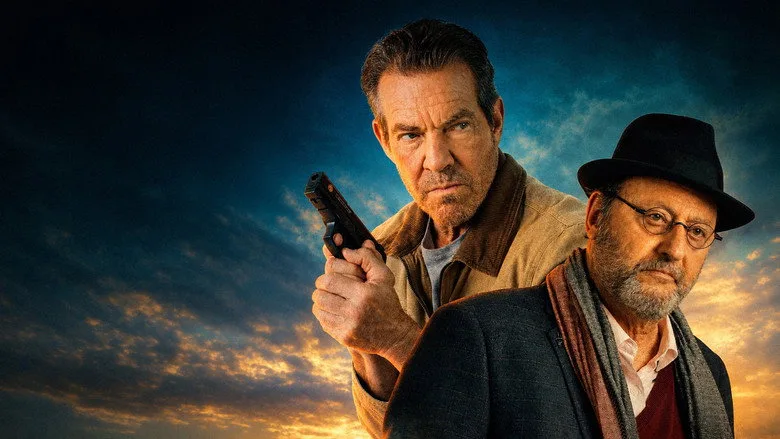











Did God command writer-director David Helling to make His Only Son (2023)? And if so, couldn’t He have changed His mind at the last minute? Here’s a movie that not only claims in the closing credits that the Binding of Isaac episode from Genesis is an “actual historical event,” but treats it the same way most films “based on true events” treat real historical events — i.e., making stuff up. While the Bible is far from a historical document, the incidents it recounts and the characters that populate it are arguably better known than many important figures and landmarks (consider, for instance, Biblical Egypt vs. Ancient Egypt). People can tell if you make changes, like Ridley Scott interpreting literal acts of God in the insurance policy sense of the expression in Exodus: Gods and Kings. I’m always bemused by filmmakers who, like Helling, believe scripture to be the living word of God, yet dare to retcon the Bible. In this case, the footnote declaring that “certain of the characters, events and dialogue portrayed in this motion picture were created for the purpose of fictitious dramatization” is quite the understatement. For starters, some of that dialogue includes Isaac (Edaan Moskowitz) saying, and I quote, “Wow... This is amazing.” Holy anachronistic slang, Batman! In Genesis 22:3, “Abraham rose up early in the morning … took two of his young men with him, and Isaac his son … and went unto the place of which God had told him” to go and “offer” Isaac “as a burnt offering.” In Genesis 22:4 “Abraham lifted up his eyes, and saw the place afar off.” His Only Son manages to squeeze the bulk of its 100-minute runtime between those two verses. Like Last Days in the Desert, His Only Son is an “imagined” biblical chapter. This is fitting if we take into account that Abraham (Nicolas Mouawad), if he existed (which he almost certainly did not), had an overactive, not to say, dangerous, imagination. Then again, paranoid schizophrenia makes you, by biblical standards, better than normal — which is both the movie’s foundation and its structural flaw. On the one hand, insanity is next to divinity; on the other, the film refuses to acknowledge that Abraham is insane. The two young men, unnamed in the source material, are here identified as Kelzar (Ottavio Taddei), a heretofore unheard-of son of Abraham’s steward Eliezer of Damascus (Luis Fernandez-Gil), and Eshcolam (Nicolai Perez), Abraham’s Pelishtiy (Philistine) servant who feels, not unreasonably so, that Abraham is oppressing him. Eshcolam is the only sensible person in the entire movie, and as such he finds himself trapped in a sort of catch 22. When he rhetorically asks, “I should drop down and kiss [Abraham’s] feet for giving me the honor of being his slave?” this is the answer he gets: “Much better to be a slave to the righteous than a slave to the wicked.” Helling expects this sophistry to constitute a satisfactory explanation. Eshcolam has been written into the plot solely to be what is known in wrestling as a jobber. In other words, Eshcolam must be wrong so that Abraham may be right. Case in point, Abraham & Co. encounter a dying man whose daughter has been abducted. Abraham blames a party of King Abimelech’s soldiers (“my people,” Eshcolam points out) they had run into earlier; never mind that he, as Eshcolam rightly notes, has no proof other than that “it is like them to do such a thing.” Lo and behold, the two groups meet once more, and of course the Pelishtiys are holding the man’s daughter captive, thus proving Eshcolam wrong. Now, that Abraham was right about that one thing doesn’t mean he’s right about everything else, although it’s safe to say that Helling hoped we would see it that way. To add insult to injury, Isaac proposes that they take him instead of the girl. “We can make him an effeminate,” howls one of the soldiers. “Many in the court will love that!” The slanderous implication is that since the Pelishtiys are such “wicked” people, it follows that they practice homosexuality. Is that how it is? Much better to be a slave to an adulterous would-be filicide than a slave to fairies? This is one of those events that have been “created for the purpose of fictitious dramatization,” though it wouldn’t be out of place in the Old Testament, so heavy-handed and narrow-minded it is. Abraham and Isaac finally make it to verse 4 after much debating that always ends with Abraham trumping Eshcolam’s sound arguments by playing the God card (as evinced by a series closing scriptural quotes, Helling favors believing over thinking) and following many flashbacks that depict Abraham’s wife Sarah (Sara Seyed) as a hysterical hag. First she wants Abraham to have sex with their Egyptian maid so he can have the heir God has been promising him for the past 10 years, but when he does, Sarah holds it against him. All this old couple bickering is moot anyway, since Sarah does bear Abraham a son after all — another son, rendering the film’s title a contradiction in terms, just like much of the Bible. Abraham comes clean to Isaac: “the Lord has said for you to be the sacrifice.” Isaac is taken aback, as well he should be. Abraham attempts to console him with his by now typically faulty line of reasoning, which boils down to the ultimate argument from authority: “because God says so.” This crazy bastard is supposed to be some sort of heroic role model, when the truly brave thing to have done would be to tell the voices in his head to go fuck off. It’s downright mystifying that in the third decade of the 21st century a movie is still selling this Binding of Isaac stuff as something even remotely positive. Make no mistake — it is a teachable moment, but this dogmatic, retrograde film gets the lesson entirely wrong.